
 Products for professionals GREEN PHARM COSMETIC


 Face care GREEN PHARM COSMETIC
 Body care TOSUMI
 Hair care YOCASE
 THE LAB BEAUTY / PANTHENOL-Intensive care
 New arrivals


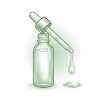
Face serum entered our everyday lives not so long ago, just a few decades ago. In the middle of the last century, scientists were given the task of developing a product that would help quickly heal wounds, cuts and burns. After many years of research, such a remedy was created. The liquid substance that quickly healed the skin after injuries was named Serum (from the Latin "ser", to flow). Scientists, pharmacists and chemists continued their research and discovered that, depending on the concentration and composition of the active ingredients, serums are able to affect many different skin problems, wrinkles, capillaries, pigmentation spots, pimples, acne and many others. It is no wonder that many cosmetics companies became interested in these developments and began to produce serums with various purposes for the daily skin care of women and men.
Let us try to explain what a serum is, what types there are, how it differs from creams and why it should be used in skin care.
How does a serum differ from a cream?
A serum is a concentrated bioactive cosmetic product for tackling a specific problem. In a serum, the concentration of active ingredients is much higher than in any cream. Thanks to its composition, a serum is able to penetrate into the deep layers of the skin and effectively carry out the tasks set for it.
So why do we need creams at all?, you may ask. A serum is a wonderful thing, but it does not provide complete care. Its main task is to deliver active ingredients to the skin cells so that they act on a specific problem. That is why there is no "just a caring" serum. Creams perform the function of basic care, they nourish, moisturise and saturate the skin with vitamins. The greatest effect is achieved when serum and cream work in tandem.
What types of serum are there?
As we mentioned earlier, serums are aimed at solving specific skin problems. Buying a serum is not difficult these days, but you should approach it thoughtfully so as not to harm yourself but, on the contrary, to get the greatest possible effect from it.
So, we distinguish:
1) Hyaluronic acid serum. This is probably the most universal face serum, and the reviews of it are very, very positive. The serum has strong moisturising properties and promotes the production of collagen and elastin.
2) Serum for pigmentation, acts on pigmentation spots by eliminating excess melanin in the skin and stabilises its production.
3) Serum for capillaries (anti-couperose), strengthens the blood vessels, fights stagnation in the skin and normalises blood circulation.
4) Lifting serum, tightens the skin and increases the firmness and tone of the face.
5) Vitamin serum, saturates the skin with beneficial ingredients and vitamins and helps improve the complexion and rejuvenate the skin.
6) Antioxidant serum, removes toxins, evens out the complexion and makes the skin smooth and soft.
7) Anti-ageing serum, this is a serum aimed at fighting wrinkles and preventing skin ageing.
8) Serum for problem skin, aimed at fighting acne and other skin inflammations, and has an antibacterial effect.
How to use serum?
There is nothing difficult about using a serum. After cleansing and toning the skin, the serum is applied to the face in small dots. Just two or three drops are enough. As a rule, the serum spreads easily over the skin. Sometimes a feeling of stickiness or tightness may appear. There is no need to worry, this is normal. Next, you should apply a cream suited to your skin type, nourishing or moisturising, which completes the whole process.
We have already explained what a face serum is and what it is needed for. To sum up, we would like to recommend making it a habit to use a serum in your daily care. After all, caring for your skin is just as natural as regularly washing your hair or brushing your teeth. Be beautiful and love yourself!
Did you like this publication?


